Mechanics of Secure Online Card Payments in Today's Digital Marketplace
Written by Carlo Brooks · Nov 23, 2026

Mechanics of Secure Online Card Payments in Today's Digital Marketplace
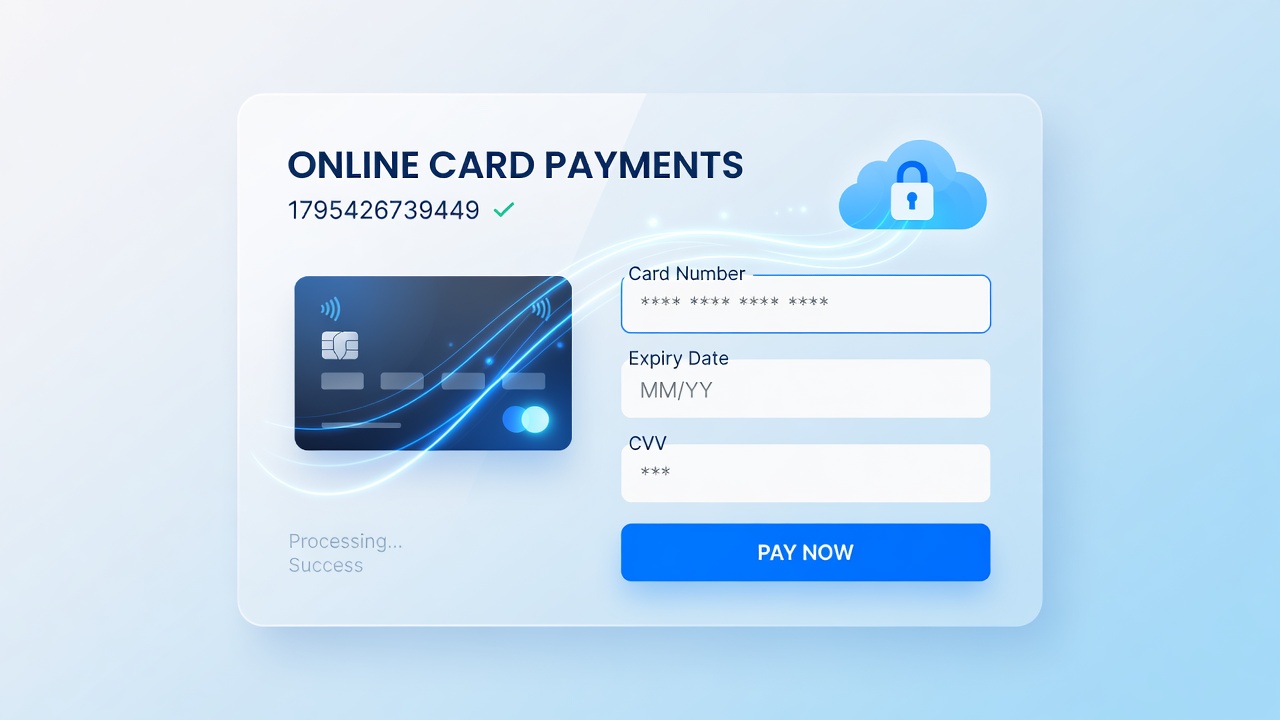
Online card payments operate through a structured sequence of steps that connect customers, merchants, acquiring banks, card networks, and issuing banks, and this infrastructure supports billions of transactions each year across global e-commerce platforms. The process begins when a cardholder enters payment details on a merchant website, after which the information travels through encrypted channels to the payment processor for initial validation, and authorization requests then move to the card network which routes them to the issuing bank for approval or decline decisions based on available funds and fraud checks.
Authorization and Data Flow in Digital Transactions
Authorization represents the first critical phase where the merchant's system sends transaction details including card number, expiration date, and amount to the acquirer, and the acquirer forwards this request through the card network such as Visa or Mastercard to the issuer who verifies the account status and responds within seconds. This rapid exchange relies on standardized protocols like ISO 8583 for message formatting, while tokenization often replaces actual card details with unique identifiers to reduce exposure during transmission. Observers note that many platforms now integrate 3D Secure protocols which add an additional authentication layer requiring cardholders to confirm their identity through their bank app or a one-time code sent via text.
Security Protocols and Compliance Requirements
Security standards such as PCI DSS define specific controls that merchants and service providers must implement to protect cardholder data, and compliance involves regular audits, network segmentation, and encryption of data both in transit and at rest. Data from the PCI Security Standards Council shows that organizations maintaining these controls experience fewer breaches compared to non-compliant entities, and payment service providers often offer hosted solutions that shift much of the compliance burden away from individual merchants. Researchers at institutions like the Federal Reserve have documented how end-to-end encryption and point-to-point encryption further limit opportunities for data interception during online processing.
Clearing, Settlement, and Settlement Timelines
After authorization comes clearing where the acquirer submits transaction batches to the card network which calculates net positions between issuers and acquirers, and settlement follows as funds move from the issuer to teh acquirer typically within one to three business days depending on the card brand and region. In the European Union the second Payment Services Directive has influenced faster settlement options for certain transactions, whereas in Australia the Reserve Bank of Australia has overseen reforms that encourage real-time payments alongside traditional card rails. These timelines affect merchant cash flow, and many businesses now use integrated platforms that provide next-day funding options for an additional fee structure.
Emerging Trends and Regulatory Developments Through Late 2026
Payment networks continue to expand support for contactless and mobile wallet integrations that link to card credentials, and adoption rates have accelerated as consumers shift toward digital channels. In November 2026 several jurisdictions plan to phase in updated requirements around strong customer authentication and open banking interfaces that allow authorized third parties to initiate payments directly from bank accounts while still leveraging card rails where preferred. Canadian authorities through the Financial Consumer Agency of Canada have published guidance on transparency in fee disclosures that merchants must follow when accepting cards online, and similar consumer protection measures appear in other markets to standardize disclosure practices.
Industry reports from organizations such as the World Bank indicate that cross-border online card transactions face additional layers of currency conversion and regulatory scrutiny, yet automated systems now handle most compliance checks before funds reach settlement. Those who manage high-volume platforms often deploy machine learning models trained on historical transaction patterns to flag anomalies in real time, reducing chargeback rates without manual review of every case. What's interesting is how these systems integrate with global address verification services and device fingerprinting to build risk scores that issuers consult during authorization.
Conclusion
The infrastructure supporting online card payments combines established protocols with ongoing enhancements in security and speed, and stakeholders across the payment ecosystem continue to adapt to new regulatory milestones and technological capabilities. As November 2026 approaches, scheduled updates to authentication standards and regional payment frameworks will shape how transactions are processed, cleared, and settled in the months ahead, while data from multiple central banks and standards bodies provides benchmarks for measuring progress in fraud reduction and operational efficiency.