Mitigating Risks in Automated Subscription Renewals Using Advanced Verification Methods
Written by Taylor Perry · Sep 28, 2026
Mitigating Risks in Automated Subscription Renewals Using Advanced Verification Methods
Businesses that rely on automated subscription renewals face ongoing challenges with payment failures, unauthorized transactions, and account takeovers, and advanced verification methods have become central to addressing these issues. Data from payment industry reports shows that recurring billing systems process billions of transactions annually, yet fraud attempts continue to rise in volume and sophistication.
Common Risks in Recurring Billing Systems
Payment declines occur when card details expire or funds prove insufficient, while fraudulent renewals often stem from stolen credentials used without account holder knowledge. Research indicates that subscription-based services experience higher rates of chargebacks compared to one-time purchases, partly because consumers forget about recurring charges. Observers note that these patterns create financial strain for merchants through lost revenue and processing fees, and they also affect customer trust when disputes arise.
Account takeover attempts frequently target stored payment information, allowing bad actors to modify details or initiate unauthorized renewals. According to figures from regulatory bodies, such incidents have increased steadily, prompting companies to adopt layered security protocols rather than relying solely on basic authentication.
Core Verification Techniques Employed Today
Tokenization replaces sensitive card data with unique identifiers that cannot be reverse-engineered, and this approach reduces exposure during storage and processing. Address verification systems cross-check billing information against issuer records, flagging mismatches that may signal fraudulent activity. Three-domain secure protocols add an extra authentication layer where cardholders confirm transactions through their issuing bank, and adoption of these standards has grown across multiple regions.
Machine learning models analyze transaction patterns in real time, comparing current renewals against historical behavior to detect anomalies. These systems evaluate factors such as device location, purchase frequency, and amount variations, then assign risk scores that determine whether additional checks apply. Studies from academic institutions have demonstrated that such predictive tools lower false positives while catching more suspicious activity than rule-based methods alone.
Integration of Multi-Factor Approaches
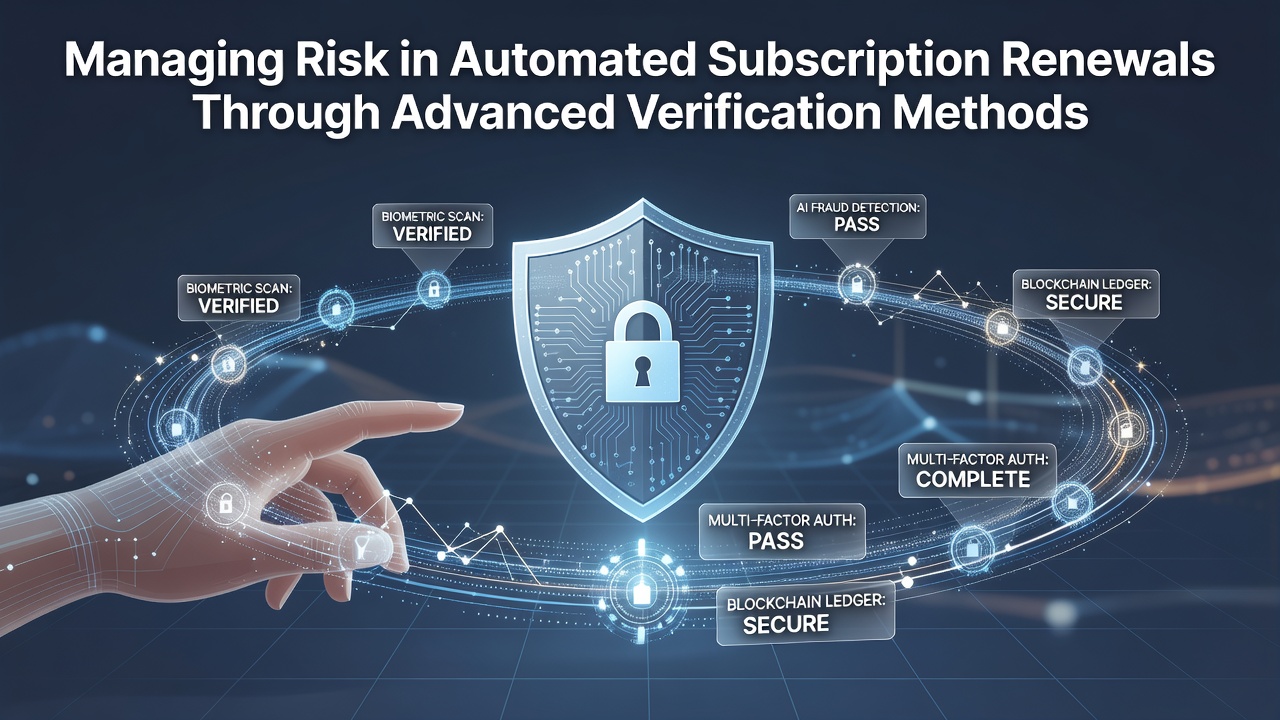
Many platforms combine verification tools into unified workflows that activate based on transaction risk levels. Low-risk renewals proceed with minimal friction, whereas higher-risk ones trigger additional steps like one-time passcodes or biometric confirmation. This graduated strategy maintains user experience while strengthening defenses, and data shows it improves approval rates without compromising security.

European regulations under PSD2 require strong customer authentication for electronic payments, and similar frameworks have emerged elsewhere. In September 2026, updates to certain international standards are scheduled to take effect, requiring broader implementation of dynamic verification elements in recurring payment setups. Merchants operating across borders must align their systems accordingly to avoid compliance issues and maintain processing privileges.
Practical Implementation Examples
One subscription service provider integrated device fingerprinting with behavioral analytics and recorded a measurable drop in disputed transactions within the first quarter. Another organization applied velocity checks that limited rapid renewal attempts from single accounts, reducing exposure to automated fraud tools. These cases illustrate how targeted verification reduces operational losses while preserving legitimate customer flows.
Industry organizations such as the PCI Security Standards Council publish guidelines that help companies structure their verification stacks. Reports from the Federal Trade Commission highlight consumer protection aspects tied to recurring billing transparency and dispute resolution processes.
Monitoring and Continuous Improvement
Regular audits of verification performance allow teams to refine thresholds and update models as fraud tactics evolve. Metrics such as approval rates, chargeback ratios, and customer completion times provide feedback loops that guide adjustments. Companies that review these indicators monthly often identify emerging patterns sooner than those relying on annual assessments.
Conclusion
Advanced verification methods continue to evolve as subscription models expand across sectors. Organizations that deploy tokenization, machine learning, and multi-factor protocols alongside regulatory compliance measures position themselves to handle renewal risks more effectively. Ongoing adaptation remains essential because threat landscapes shift and new standards, including those slated for September 2026, reshape operational requirements.