The Influence of Fraud Detection Algorithms on Recurring Billing Success Rates in Diverse Merchant Categories
Written by Eden Jung · Sep 14, 2026
The Influence of Fraud Detection Algorithms on Recurring Billing Success Rates in Diverse Merchant Categories
Payment processors deploy fraud detection algorithms that scan transaction patterns in real time, and these systems evaluate risk scores based on historical data, device fingerprints, and behavioral signals before approving recurring charges. Merchants in subscription services often see higher approval rates when algorithms incorporate machine learning models trained on chargeback histories, while sectors like utilities experience different outcomes because their customer bases generate steadier payment flows with fewer velocity triggers.
Core Mechanisms Behind Algorithmic Decisions
Algorithms assess factors such as IP geolocation consistency, card velocity across multiple accounts, and past authorization attempts, then they assign risk levels that determine whether a recurring payment proceeds or faces review. In practice, a SaaS provider might encounter declined transactions if the system flags unusual login times, whereas a fitness membership platform could maintain steady success rates through whitelisting of known customer devices. Data from industry reports shows that false positive declines can reduce overall billing success by 5 to 12 percent in high-volume categories, and merchants adjust thresholds accordingly to balance security with revenue retention.
Variations Across Merchant Categories
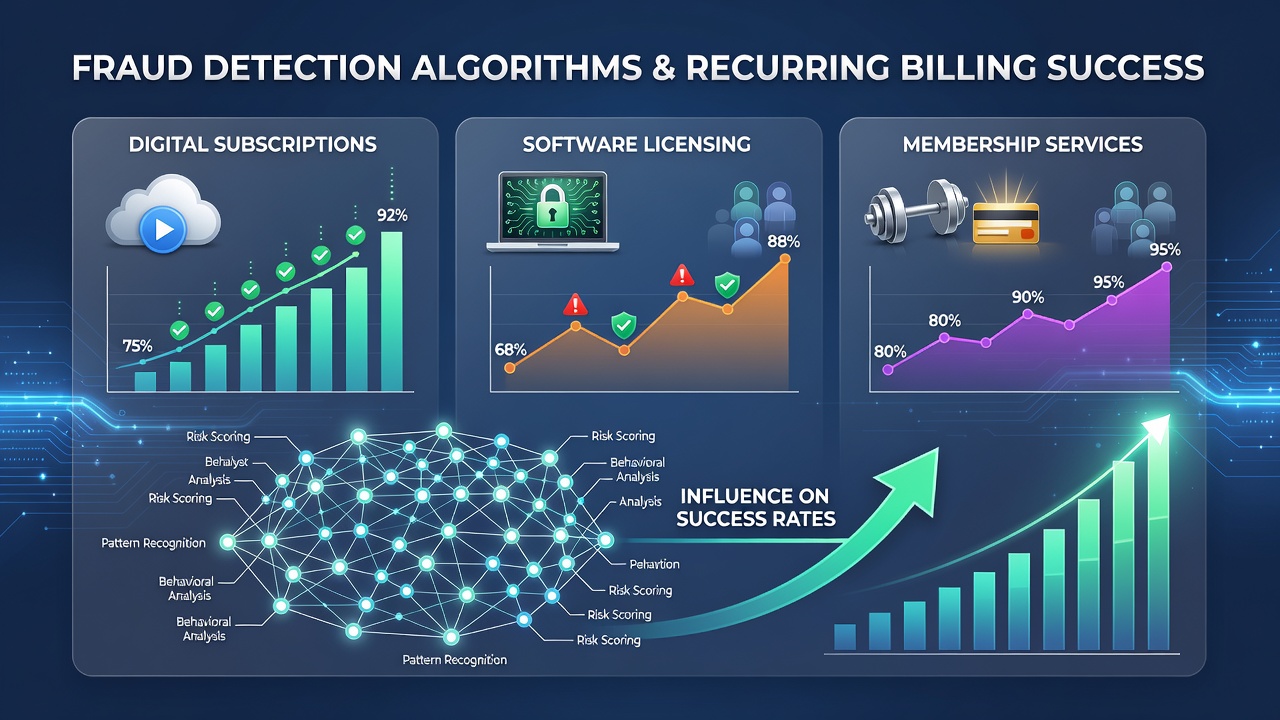
Digital content platforms report that adaptive algorithms improve recurring billing outcomes when they integrate account age and payment method tenure into scoring models, yet e-commerce subscription boxes face steeper challenges because physical goods shipments introduce additional variables like shipping address changes. Researchers at academic institutions have documented that categories involving digital goods achieve success rates above 92 percent after algorithm refinements, while categories tied to physical delivery hover closer to 85 percent under similar conditions. Observers note that health and wellness recurring services benefit from algorithms that weigh membership duration heavily, which reduces unnecessary holds during renewal cycles.
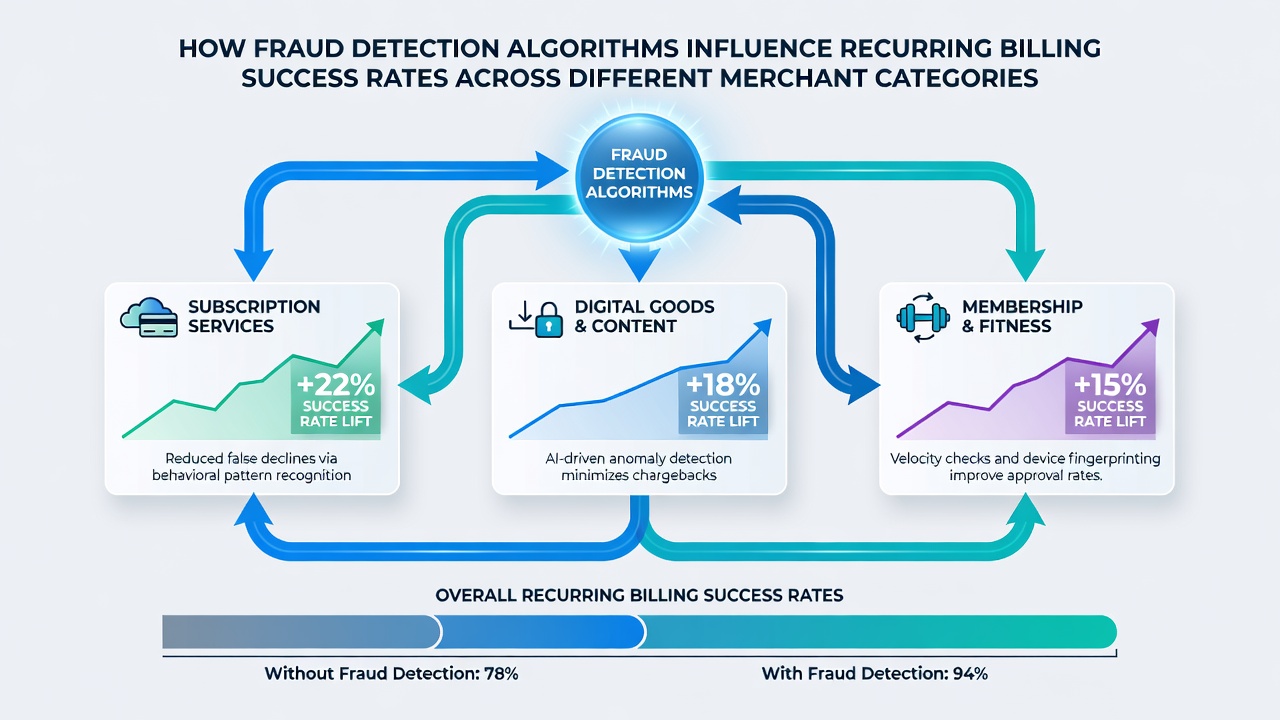
Financial services and insurance providers operate under stricter regulatory scrutiny, so their algorithms incorporate compliance signals from sources such as the Bank for International Settlements guidelines, and this integration leads to lower false decline rates in September 2026 compared with earlier periods. Retail subscription models, by contrast, rely more on behavioral biometrics, and studies indicate these approaches lift approval rates when combined with customer loyalty indicators.
Data Patterns and Industry Benchmarks
Figures released by payment networks reveal that fraud detection refinements in 2025 produced measurable lifts in recurring success rates for software-as-a-service merchants, while media streaming services recorded modest gains tied to improved device recognition. One analysis from a Canadian research consortium found that categories with predictable billing cycles, such as telecommunications, experienced fewer algorithm-triggered declines because transaction amounts remain stable over time. In contrast, variable-amount categories like charitable donations encounter higher review volumes, which can delay processing and affect monthly totals.
Merchants in the gaming sector have adjusted algorithm parameters to account for micro-transaction patterns, and evidence from European Central Bank publications suggests these tweaks correlate with sustained success rates above 90 percent in recurring billing segments. Utilities and insurance categories continue to show resilience because algorithms prioritize account tenure over velocity checks, reducing interruptions during automated renewals.
Implementation Considerations for Different Sectors
Organizations that integrate real-time feedback loops into their fraud systems allow algorithms to learn from approved versus declined recurring transactions, and this iterative process yields category-specific improvements over successive billing cycles. SaaS companies often prioritize low-latency scoring to prevent churn from declined renewals, whereas physical goods merchants incorporate inventory-linked signals that help algorithms distinguish legitimate address updates from potential account takeovers. Those who manage high-volume recurring billing note that threshold calibration remains essential, since overly conservative settings suppress success rates across every merchant type examined.
Conclusion
Algorithm performance in recurring billing varies systematically by merchant category because each sector presents distinct transaction characteristics and customer behaviors. Continued refinement of these systems, informed by cross-industry data, supports more consistent approval outcomes while maintaining fraud controls. Payment stakeholders track these metrics closely as billing volumes grow through 2026 and beyond.